The Loss of Taste
Taste is what time leaves behind — and scale is a machine for skipping time
Notes from a Cosmo Local CNX keynote in Chiang Mai, and the thread that ran through the two talks after mine: industrialized food and automated content both trade substance for volume.
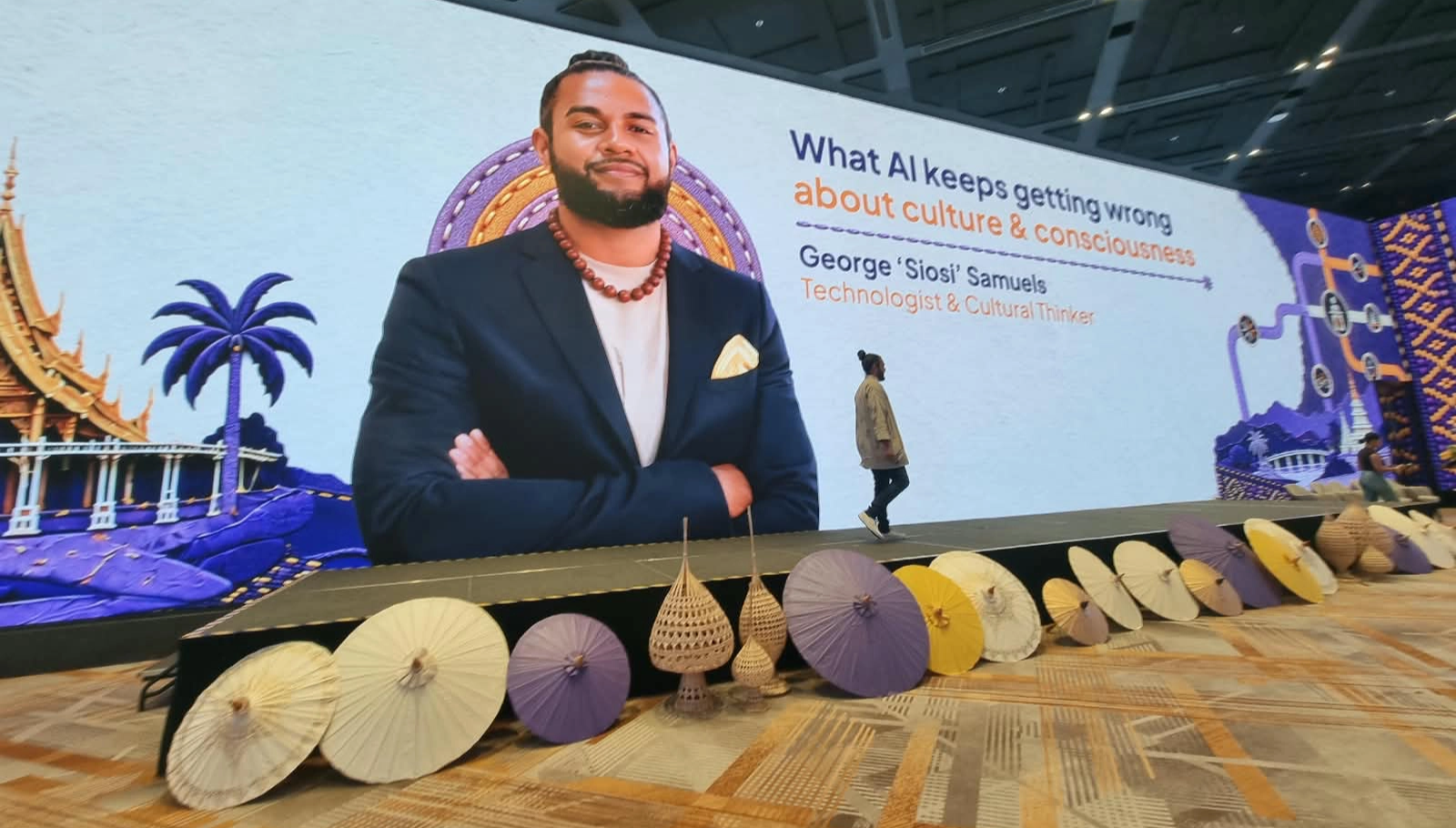
Last Thursday I gave a keynote in Chiang Mai, on a stage that wrapped 360 degrees around the audience. The event was Cosmo Local CNX, part of Main Week, held at the Marriott. About 150 people had registered; somewhere between 80 and 100 came. Three speakers, and I went first.
My talk was What AI Keeps Getting Wrong About Culture & Consciousness (request access to the original slides). Culture is the training data that never makes it into clean checkboxes, consciousness is the benchmark nobody has agreed how to measure, and most failed AI projects die a layer above the model. Alignment is a practice, not just a policy. Policy is the part you can write down; the practice is learning how to ask better questions.
I closed with a case for Chiang Mai as a counter-model — high adoption, low institutional weight, a city that's been holding a middle way for centuries — and the Monday-morning moves: name your anchor, audit three, protect five.
Then I got to sit down and listen, which is the better half of any speaking engagement.
Two talks, one subtraction
Ben spoke after me. He writes Digital Citizen on Substack, and his slides were almost entirely images, carrying very little text. He said his business doesn't make money directly from AI. He automates what can be automated and holds back the parts that carry his own judgment. He'd tried loading his tone into the machine more than once, and it didn't land.
The third speaker was Jon Jandai, who needed no slides at all. He's the farmer behind Life is easy. Why do we make it so hard?, a TEDx talk with more than 15 million views, and the founder of Pun Pun, an organic farm and seed-saving center outside the city. His talk was about food, and what industrialization did to it. Volume up, scale up, taste gone.
Two speakers, one on newsletters and one on rice, describing the same subtraction from opposite ends of the table.
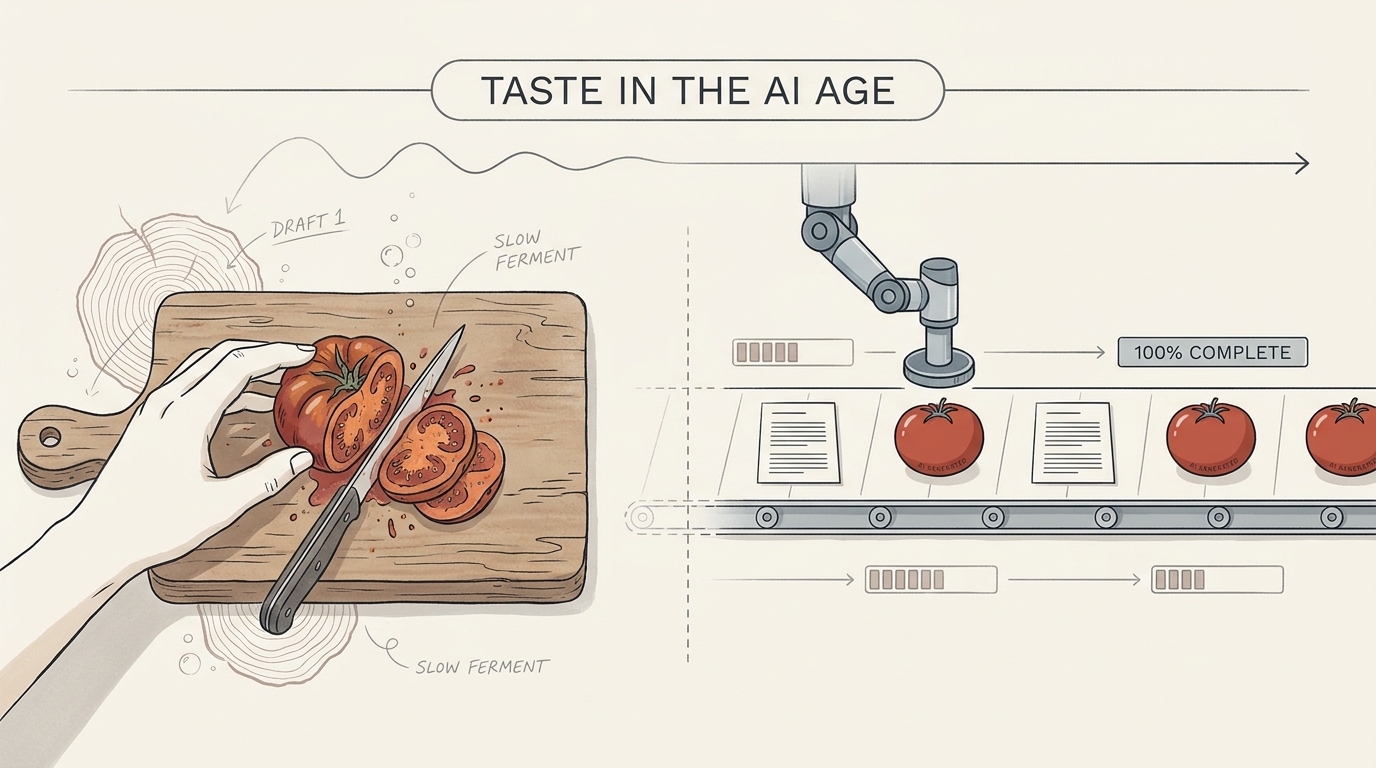
In food, the subtraction is measurable. Industrial breeding optimized for yield, uniformity, and shelf life. The sugars, minerals, and volatile compounds that make a tomato worth eating dropped along with the flavor. The loss of taste was a loss of nutrition wearing a costume.
In the digital version the nutrients are harder to name, which is probably why we ignore them. Judgment, voice, the specific thing a person noticed and the specific way they said it. Automate the tone and the format survives while the substance thins out. High yield, no taste. It looks nice, and there's nothing in it. (I wrote about the rise of "taste" as a competitive edge back in 2025.)
Taste is what time leaves behind
Taste is what time does to material. Ripening, fermenting, proofing, a second draft, a decade of listening to people — each is time deposited into substance, and none of it can be rushed without being cheapened. Scale is a machine for skipping that time, which is why it costs so much.
Silicon is built for that. It computes in parallel, never ripens, never tires, and has no body that has to wait. Timelessness is native to it. Carbon accrues. Our taste is accumulated time — years of reading, cooking, failing, being corrected — and that accumulation is what we mean by density.
I picked this frame up from a video, so the credit isn't mine. If time is the fourth dimension, timelessness may be the fifth. To experience timelessness you have to respect time first, and then close it. I'm not sure what closing time requires. It may mean finishing things; I don't think it has to mean death.
You can't invert the order. Speed postpones timelessness; it never delivers it.
Where I would put the guardrail
I use AI every day and I intend to keep using it. My interest is in where the line sits, and I think time draws it, more than task type does. Automate the parts that never had taste in them — formatting, transcription, the fourth version of a summary, the schedule. Keep the parts where time is the value — the reading, the noticing, the tone that has to sound like a person, the decision someone will have to answer for.
The physical version of this is already familiar. We know what a slow-grown tomato costs and why it's worth it. We know what happens to a body fed on volume. What's new is that the same trade is now available in cognition, and it arrives dressed as productivity, so we take it.
More automation, less taste. In food we can measure the nutrients we gave up. In digital work the loss shows up as agency — people who no longer feel like the author of their own thinking. Neither bill arrives on time, which is how the trade keeps getting made.
Do we want that?