Your AI Stack Is Technically Sound. Your Harness Is Broken.
Why technically successful AI implementations still fail — and the structural discipline that fixes them.
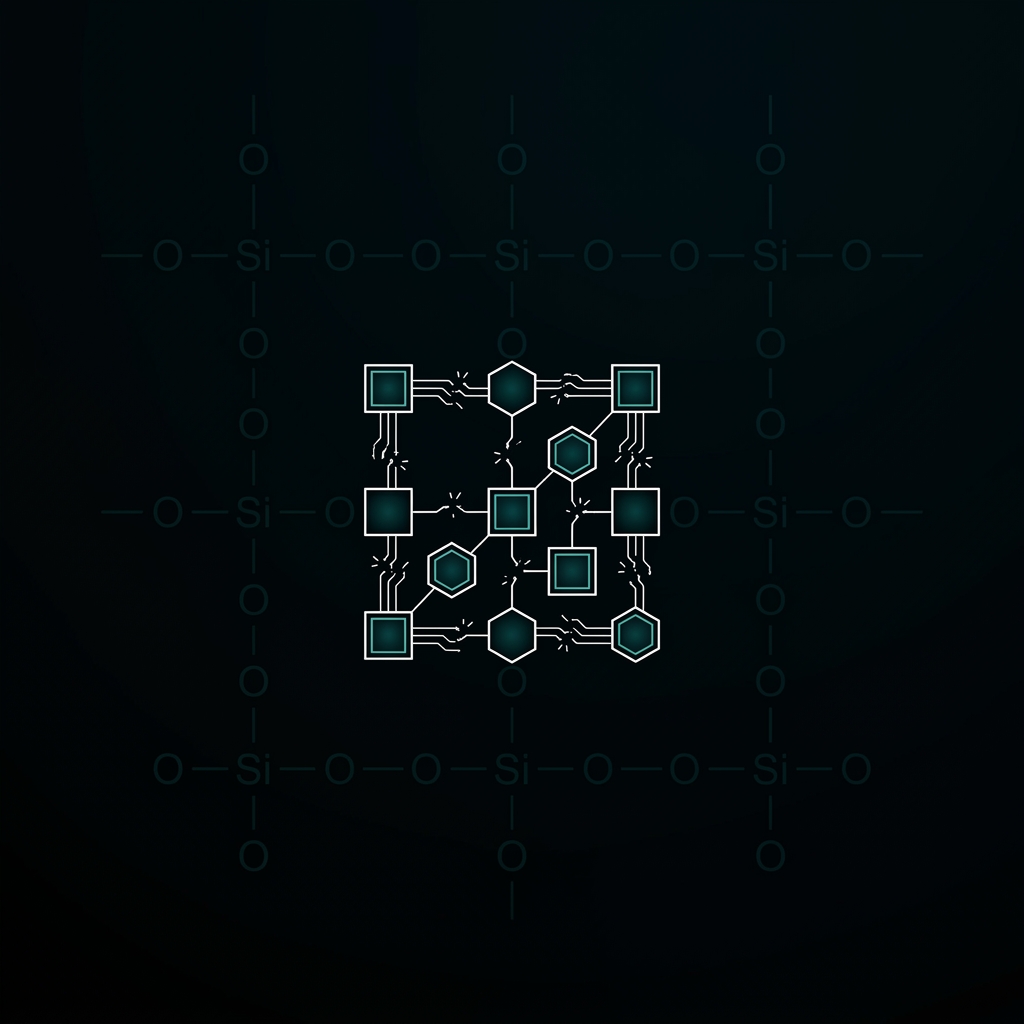
Your AI initiative just cleared every milestone that should matter. The implementation delivered on time. The accuracy benchmarks look strong. Your technical team did the work.
And something is still wrong.
Not with the technology. The technology works. The problem is the architecture sitting between your people and the machine — the harness. And a broken harness produces a specific, recognizable failure pattern that no additional AI tooling will fix.
I've spent 15 years at the intersection of emerging technology and organizational design, watching this pattern repeat across blockchain, Web3, and now AI: the Surface Stack gets built with tremendous precision while the structure connecting it to human cognition is left to chance. The result is always the same — technical success, operational friction, cultural resistance that nobody can name.
This is not a change management problem. It is a structural one. And it has a structural solution.
The Failure Pattern Nobody Names Correctly
When AI adoption stalls in technically successful deployments, the symptoms look cultural: passive compliance with systems people work around, departmental fragmentation into conflicting AI approaches, decision paralysis when evaluating vendors and features, and a persistent sense that the technology doesn't reflect what the organization actually is.
Consultants call this change management. They're wrong. These are diagnostic signals of a broken harness.
The distinction matters because the interventions are completely different. Change management treats the symptom. Harness Engineering treats the structure. You can run workshops indefinitely and never repair a geometric inversion.
The misdiagnosis is expensive — not just in direct spend, but in the organizational tax it levies: leadership attention diverted to symptoms, technical teams blamed for cultural problems, and the slow erosion of confidence in the next technology decision.
Surface Stack vs. Shadow Stack
Here is the most important diagnostic question in AI strategy, and almost nobody is asking it:
If your primary AI vendor changed its pricing model tomorrow — or the next generation of models rendered your current workflow obsolete — what would survive?
If the honest answer is "very little," you have a Surface Stack and no Shadow Stack.
Your Surface Stack is everything visible and describable: the AI tools, APIs, automation pipelines, prompt libraries, and vendor relationships your team uses today. It is real and it generates value. It is also entirely dependent on infrastructure you do not own, governed by terms you did not negotiate, and subject to deprecation cycles faster than most enterprise change timelines.
Your Shadow Stack is what exists beneath the surface: sovereign memory, synthesis protocols, the cognitive architecture your team uses to make decisions with and around AI, and the identity structures that determine how your organization relates to technology. The Shadow Stack is metabolic — it absorbs disruption and re-wraps around it. A model transition that devastates a Surface Stack organization is a calibration adjustment for a Shadow Stack organization.
Most AI consulting is Surface Stack consulting. It is useful. It is not sufficient.
Building the Shadow Stack is the work most organizations skip because it is harder to put in a deck, harder to run through procurement, and harder to hand to a junior implementation team. But it is the only layer that compounds. Every investment in your Surface Stack depreciates toward zero as models improve and vendors pivot. Every investment in your Shadow Stack — in decision architecture, cognitive protocols, organizational coherence — appreciates.
The Geometry Problem at the Root of AI Adoption Failure
Within the Shadow Stack sits a structural principle that explains most AI adoption failure: the 1:3:5 Topology.
A properly functioning Conscious Stack has a precise geometric architecture:
| Layer | Count | Function |
|---|---|---|
| The Apex | 1 tool | Single point of absolute state and ground truth |
| Active Routing | 3 tools | Heavy-duty processing and querying, feeding the Apex |
| Wide Periphery | 5 tools | High-noise, fast-ingestion contact with the outside world |
The Apex is not the most used tool. It is not the most powerful tool. It is the tool that holds structural truth. In most organizations, that role belongs to whatever system carries organizational memory — often a project management or documentation layer. Everything else processes, queries, or surfaces. Nothing else decides.
AI burnout happens when this geometry inverts.
When executives treat a Peripheral AI tool — something designed for high-noise, fast-ingestion interaction — as if it holds Apex authority, the entire stack fractures. A mobile AI assistant is a Level 5 Peripheral. When it becomes the de facto source of strategic synthesis and organizational memory, the geometry has collapsed. The tool is doing a job it was never designed to do. The people using it sense something is wrong but cannot articulate what.
This is not a criticism of the tool. It is a structural diagnosis of where it was placed. Harness Engineering is the discipline of getting the geometry right.
What Harness Engineering Actually Is
Prompt engineering optimizes a single input-output interaction. It makes individual exchanges more precise. It is valuable at the tactical layer.
Harness Engineering designs the entire system connecting human to AI. It operates at a completely different altitude.
A well-engineered harness answers these questions:
- Which tool holds state, and how is that state maintained across interactions?
- Where does human judgment enter the loop, and at what decision points does AI augment rather than replace it?
- How is cognitive load distributed across the 1:3:5 topology so that high-noise peripheral tools don't contaminate Apex-level decision-making?
- What is the organizational protocol when AI output conflicts with institutional knowledge?
- What survives context window loss, vendor migration, or model deprecation?
These are not philosophical questions. They are engineering specifications. And like any engineering problem, ignoring them produces predictable structural failure.
The reason most AI strategies fail to address harness architecture is that it sits at an uncomfortable intersection: it requires technical credibility to diagnose, but the failure manifests as cultural symptoms. The technical team says the system works. The cultural team says people aren't using it right. Both are describing parts of the same broken harness.
Diagnosing Your Stack: The SIOSI Method Applied
The diagnostic lens I apply to AI harness problems is the SIOSI Method: Sense → Intuit → Orient → Synthesize → Integrate.
Most AI implementations execute only at the Orient and Synthesize stages — selecting vendors, integrating systems, measuring outputs. The breakdown happens in the stages they skip.
Sense — What is the honest signal from your organization right now? Not the implementation metrics. The actual behavioral signal: workarounds, resistance patterns, friction points that technical teams log as user error.
Intuit — What does that signal indicate about the underlying structure? Where is the geometry inverted? What is the Shadow Stack currently holding, and what is absent?
Orient — Given the structural diagnosis, what does the harness need to look like? This is where the 1:3:5 topology gets mapped against your actual tool portfolio.
Synthesize — How do the Silicon layer (your AI tools), the Carbon layer (your people and decision structures), and the Tierra layer (your organizational purpose and values architecture) need to be reintegrated? A technically correct harness that violates the Carbon or Tierra layer will generate the same resistance as a technically broken one.
Integrate — What does staged implementation look like, and how do you build reversibility into the harness so that model migrations and vendor changes don't require rebuilding from zero?
Organizations that run the full SIOSI diagnostic sequence before implementation spend less money fixing harness failures downstream. The ones that skip straight to Orient — vendor selection and technical integration — pay for the skipped steps in friction, attrition, and stalled ROI.
Building the Conscious Stack: Silicon, Carbon, Tierra
Sustainable AI adoption requires coherence across three layers.
Silicon — the technical architecture. Tools, APIs, integrations, data flows, the 1:3:5 topology. This is the domain of Harness Engineering. Most consulting firms operate exclusively here.
Carbon — the human layer. Decision protocols, cognitive load design, how AI output enters and exits human judgment, role clarity around AI-augmented work. This is where adoption resistance lives, and why it cannot be dissolved by better training or change management — it requires structural redesign at the Carbon layer.
Tierra — the organizational substrate. What does this organization exist to do? What values architecture does it carry? What kind of relationship between people and technology does it want to embody? This layer is deeper and slower-moving than Silicon or Carbon, but it governs both. AI implementations that violate the Tierra layer generate resistance that looks irrational but is structurally coherent.
The Tierra layer is not the entry point for a diagnostic. You earn the right to discuss it by fixing the Silicon and Carbon layers first. But ignoring it produces the failure pattern that shows up everywhere: AI initiatives that are technically complete and organizationally hollow.
What Harness Success Actually Looks Like
The metrics that matter for harness-aligned AI extend beyond quarterly ROI calculations.
Stack coherence — Does AI output get used without systematic workarounds? Are different departments operating from the same harness, or has each built its own?
Shadow Stack resilience — If your primary AI tool became unavailable tomorrow, how long would it take to restore operational capacity? This is a measurable harness quality indicator.
Decision confidence — Are leaders making AI-related choices with clarity and speed, or are procurement decisions generating analysis paralysis?
Geometry stability — Is the 1:3:5 topology holding? Or are Peripheral tools accumulating Apex-level authority through behavioral drift?
These measurements require a different audit approach than standard AI implementation review — one that maps the actual harness against the intended topology and identifies the gap between Surface Stack investment and Shadow Stack depth.
The organizations that invest in harness architecture early build AI adoption capacity that compounds. Each properly structured implementation makes the next one faster. Each Shadow Stack layer that gets built makes the whole system more resilient to the model transitions that will come — because they always come.
The executives who figure this out in 2026 will not be scrambling to re-implement when the next generation of models arrives. Their harness will re-wrap around the change.
The gap between your AI stack's technical performance and your organization's actual experience of it is exactly what a Stack Audit is built to close. If you can feel the friction but cannot name the structure causing it, that is the diagnostic signal.